

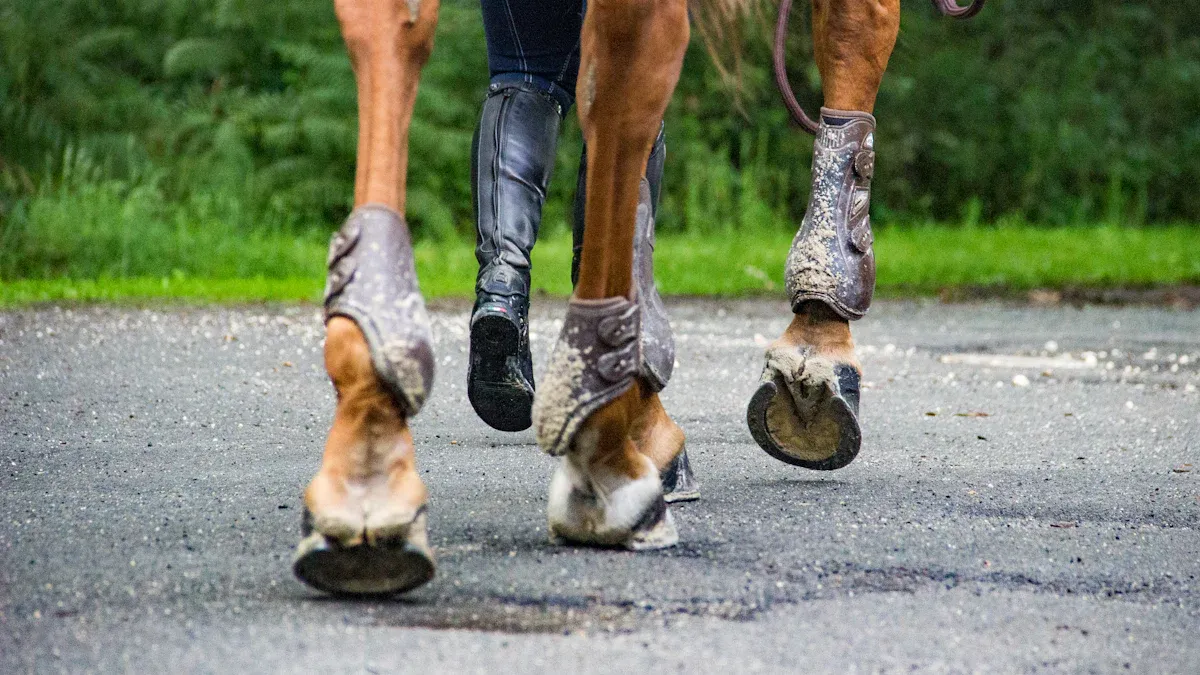
Racing plates are a specific type of horseshoes designed to enhance the performance of racehorses. They help these horses run faster while also promoting their overall health. Most racehorses wear aluminum racing plates, which are a popular type of horseshoes due to their lightweight nature. This lightweight feature ensures that they do not slow the horse down. In fact, almost all racehorses utilize aluminum plates, making them more common than other types of horseshoes. The right type of horseshoes protects the hoof and can significantly improve your horse's performance on the track.
Key Takeaways
- Racing plates are light horseshoes. They help racehorses run fast. They also help horses stay healthy.
- Aluminum racing plates are used the most. They are light and help horses perform better.
- Picking the right racing plate is important. You should think about your horse’s needs. You should also think about the track. This can help your horse run faster. It can also keep your horse safe.
- Racing plates need regular care. You should clean them often. You should replace them when needed. This keeps your horse’s hooves healthy. It also helps your horse perform well.
- You should talk to a skilled farrier. They can help you choose the best racing plate. They make sure it fits your horse. They pick the right type for your horse’s needs.
Racing Plates Overview
What Are Racing Plates
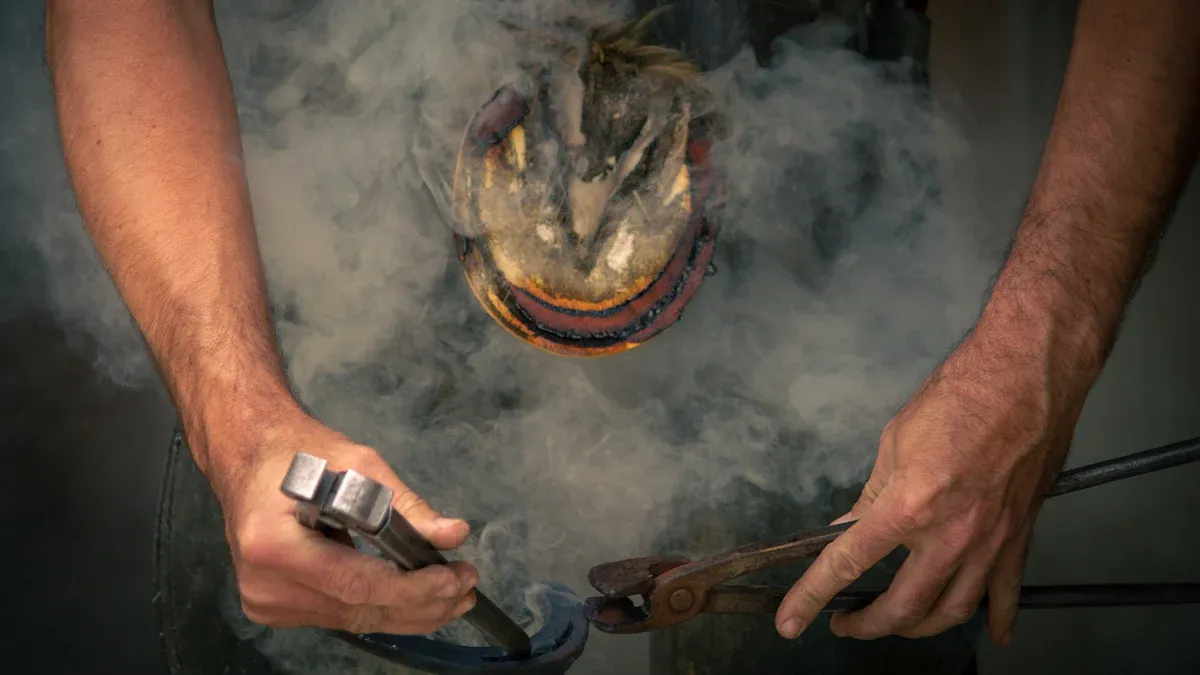
People talk about "racing plates" a lot in horse racing. Racing plates are special horseshoes for racehorses. The word "racing plates" means shoes made from aluminum or steel. These shoes protect the horse’s hooves and help it run better. Trainers and farriers pick racing plates because they are lighter than normal horseshoes. Lighter shoes help horses run faster and make their legs less tired.
Here is a simple table that explains what racing plates mean in horse racing:
| Term | Definition |
|---|---|
| Racing Plates | Jargon for horseshoes (aluminum or steel). |
When you look at different horseshoes, racing plates are easy to notice. They are made for speed and hoof protection. Most racehorses wear aluminum plates. Some use steel plates for training or special reasons.
Tip: Always ask your farrier which racing plate is best for your horse. Picking the right one can help your horse feel better and run faster.
Key Features
Racing plates have special features that make them different from other horseshoes. Each design has its own job. Trainers and farriers choose the style based on the track and the horse.
Here is a table that shows the main types and what they do:
| Type of Racing Plate | Purpose/Feature |
|---|---|
| Front Regular Toe | Used for many track surfaces |
| Front Low Toe | Made for hard or fast tracks |
| Outer Rim | Good for turf and dirt tracks |
| Inner Rim | Best for deep sandy tracks |
| Wedge | Lifts and protects heel to lower strain |
| Mud Calk | Works well for wet, muddy, or sloppy tracks |
Racing plates use aluminum because it is much lighter than steel. Lighter shoes help horses move easier. Horses notice shoe weight, especially when running fast. Racing plates help horses push off the ground quickly and keep their speed during races.
- Aluminum shoes are lighter than steel shoes.
- Shoe weight changes how your horse runs and how fast.
- Racing plates help horses push off faster for better racing.
When you look at different horseshoes, racing plates give racehorses the best mix of lightness and support. You should always pick the shoe that fits your horse and the track. This helps your horse stay healthy and do its best.
Importance
Performance Impact
You want your racehorse to run fast and stay safe. Racing plates play a big role in how your horse performs on the track. Lightweight shoes, like aluminum plates, help your horse move quickly. Less weight means less strain on the legs. Horses can push off the ground with more power and keep their speed during a race.
Some racing plates use special designs to boost performance. For example, Equishox racing plates have a unique tread pattern. This pattern gives your horse better grip and stability. Horses need good traction to avoid slipping, especially on wet or muddy tracks. Racing plates with shock-absorbing technology also help. They reduce the force on your horse’s hooves when running at high speeds. You can see how these features work in the table below:
| Feature | Description |
|---|---|
| Impact Absorption | Equishox plates absorb shock, lowering forces on the hooves during races. |
| Unique Tread Pattern | Special tread improves grip and stability, reducing injury risk. |
| Lightweight Design | Lighter shoes cut down on fatigue and stress in the legs. |
| Shock Absorbing Technology | Rubber coating lessens concussion, making racing safer and more comfortable. |
| Softer Material | Softer compounds protect against self-injury from overreaching and striking. |
Tip: Always match the racing plate to your horse’s needs and the track conditions. The right choice can make a big difference in speed and safety.
Hoof Health
You need to protect your horse’s hooves to keep it racing strong. Racing plates do more than help with speed. They also guard the hoof from injury and wear. Some types of horseshoes, like those with softer materials, lower the risk of self-injury. Horses often strike their own hooves when running fast. Softer shoes cushion these blows and keep the hoof healthy.
Shock-absorbing plates, such as those with rubber coatings, reduce concussion. This means less pain and fewer injuries for your horse. Good impact absorption keeps the hoof strong over many races. You should check your horse’s shoes often. Look for signs of wear or damage. Replace shoes when needed to keep your horse’s hooves in top shape.
Note: Healthy hooves lead to better performance and longer careers for racehorses. Regular care and the right shoe choice help you achieve this goal.
Types of Horseshoes
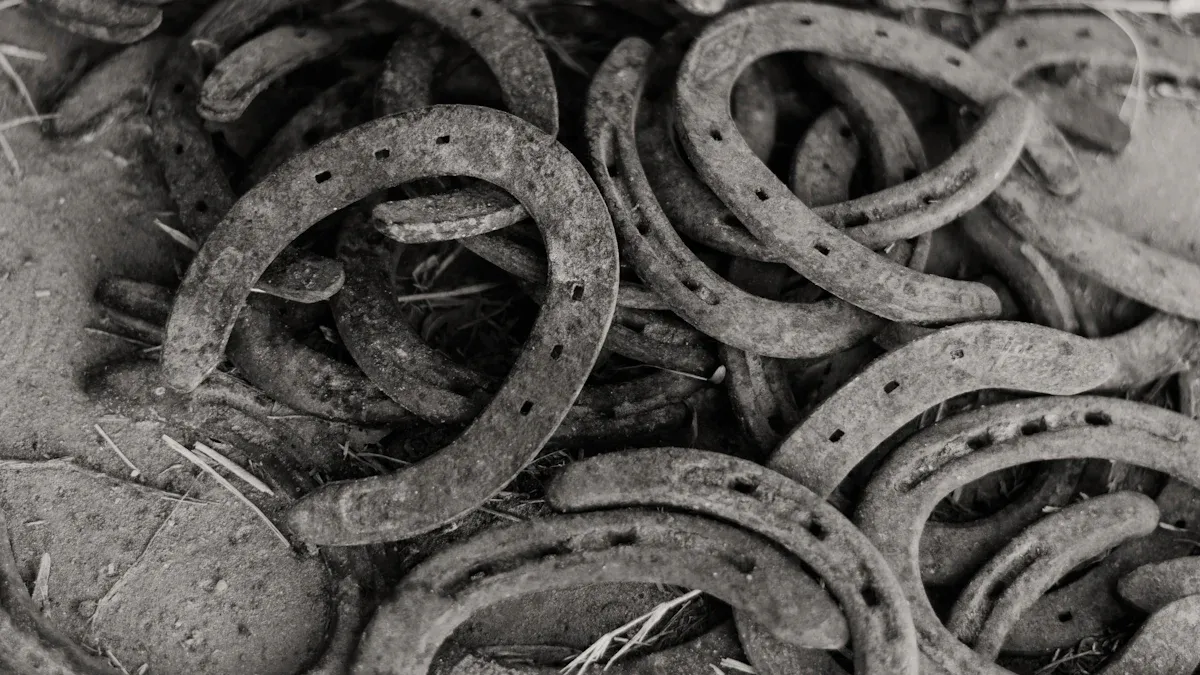
There are three main Types of Horseshoes in horse racing. Each type helps the horse in a different way. Knowing about each one helps you pick the best for your horse.
Aluminum Plates
Aluminum racing plates are the most used for racehorses. You see them on almost every horse at races. Trainers and farriers like aluminum because it is light. Lighter shoes help horses run faster. Less weight means the horse uses less energy and keeps speed.
Here is a table that compares aluminum plates to steel plates:
| Advantage/Disadvantage | Description |
|---|---|
| Weight Reduction | Aluminum is much lighter than steel, which helps in racing. |
| Thermal Conductivity | Aluminum lets heat move better, which helps performance. |
| Crash Energy Absorption | It takes in more crash energy than steel, making it safer. |
| Performance Metrics | It helps horses stop better and handle turns well. |
| Repairability | Aluminum can crack and is harder to fix than steel. |
| Durability | It does not last as long as steel if hit hard. |
Aluminum plates can break if they get hit too hard. Dents are hard to fix. You need to check them often and change them if broken. Most racing shoes use aluminum for speed and hoof safety.
Many brands make aluminum racing plates. Some top brands are:
- Victory
- Thoro'Bred
- Mustad
- Kerckhaert
These brands are used in big races. You also see brands like Cazoo, Sky Bet, SBK Bet, Bet365, Betway, Unibet, Maison Mumm, Racing UK, Penfolds, and BoyleSports at big events. Each brand has different styles for different tracks.
Tip: Always pick the aluminum plate that fits your horse and the track. Weather can change how shoes work. Rain makes tracks slippery, so you need shoes with more grip. Hot or cold days change how shoes wear out.
Glue-On Shoes
Glue-on shoes are a newer kind of horseshoe. You use glue-on shoes if your horse has weak or hurt hooves. These shoes do not use nails, so they keep the hoof safe from cracks and pain. Glue-on shoes help your horse feel better and avoid hoof problems.
Glue-on shoes have many good points:
- Glue-on horseshoes help keep hooves healthy and stop damage from rough ground.
- They help shoes last longer, which is good for horses that race a lot.
- Glue-on shoes can help your horse run better by stopping pain and hoof problems like cracks.
You should use glue-on shoes if your horse runs on hard tracks or has sore hooves. They are good for horses that need extra care.
Note: Glue-on shoes must fit well. Check them often to make sure they stay on. If you see damage or loose shoes, change them right away.
Steel Shoes
Steel shoes are the oldest kind of horseshoe. You see steel shoes mostly in training, sales, and breeding horses. Trainers use steel shoes for young horses when they first start training. Steel is strong and lasts longer than aluminum, but it is heavier. Heavy shoes can slow a horse down in a race.
- Steel shoes were the main choice for racing in the past.
- When aluminum came out, steel shoes became less used in races but are still used for sales and breeding.
- Sometimes trainers use steel shoes for young horses in early training.
Steel shoes are good for horses that need tough shoes. You might use them if your horse trains on rough ground or needs more hoof safety. But you should use lighter shoes for races.
Here is a table that shows how common each horseshoe type is:
| Type of Horseshoe | Material | Prevalence |
|---|---|---|
| Training Plates | Steel | Common |
| Racing Shoes | Aluminum | Common |
Tip: Always ask your farrier before picking steel shoes. The right shoe keeps your horse healthy and ready to race.
When you pick horseshoes, think about the track and weather. Wet tracks need shoes with more grip. Hot or cold days change how shoes work. Pick the best shoe for each race to keep your horse safe and fast.
Materials and Design
Weight
You want your racehorse to be fast and feel good. The weight of the horseshoe is very important. Aluminum racing plates are much lighter than steel shoes. Most aluminum plates weigh only 2 to 4 ounces. Steel shoes can weigh from 8 to 12 ounces. Lighter shoes help your horse run faster. They also put less stress on the legs. Aluminum plates are a good choice for speed and strength. These shoes last through many races and keep your horse’s stride smooth.
Glue-on shoes are also light. If your horse has weak hoof walls, glue-on shoes protect the hoof. They do not add extra weight. You do not need nails, so there are no nail holes. This lowers the chance of cracks. Trainers use glue-on shoes for horses that need special care or have hoof injuries.
Tip: Always check the shoe’s weight before you put it on. Lighter shoes help your horse do better and stay healthy.
Traction
Traction keeps your horse safe while running. Horses need grip so they do not slip. This is very important on wet or muddy tracks. The design and material of the racing plate change how much grip the shoe gives. Aluminum plates often have toe grabs and heel caulks for better grip. Some shoes use rubber for even more traction.
The type of rubber in the shoe helps decide how much grip it gives. Softer rubber gives more grip but wears out faster when it is hot or used a lot.
Different tracks need different traction. Asphalt, dirt, and synthetic tracks all need special shoe designs. Trainers sometimes use traction compounds to help with grip. How well these work depends on the weather and the track.
The track surface and the kind of traction compound can change how well horses race. Track owners may change the mix for each event or if the weather changes.
Fit
A good fit keeps your horse comfy and stops injuries. You must match the shoe to your horse’s hoof shape and size. Lightweight shoes, better grip, and shock absorption all help with fit. Toe grabs and heel caulks give more grip. Aerodynamic shapes let the horse’s legs move naturally.
- Key things for a good fit:
- Light shoe design
- Toe grabs and heel caulks in the right spots
- Better breakover for easy hoof movement
- Shock absorption to lower impact
- Aerodynamic shape for a smooth stride
You should always ask a skilled farrier to help pick the best fit. The right shoe supports your horse’s hoof and keeps it safe while racing. When you look at Types of Horseshoes, always think about fit and comfort for each horse.
Selection
Farrier Considerations
You want your horse to do its best in races. A skilled farrier helps you pick the right racing plate. Farriers look at many things before they decide. They study your horse’s body and legs. They check if your horse stands with its legs turned in or out. They look at the hock and see if the body is balanced. Farriers also measure the angle of the hoof and check the front hooves. They ask you and your trainer about how your horse trains and what kind of ground it runs on.
- Farriers look at how your horse’s legs are shaped.
- They check the hock and see if the body is balanced.
- They measure the hoof angle and check the front hooves.
- They think about if your horse is racing or just training.
- They ask about how your horse is doing and what track it runs on.
Farriers use different ways to check hoof health before picking a racing plate. Here is a table that shows how they do this:
| Assessment Method | Description |
|---|---|
| Visual Evaluations | Farriers look at hooves for problems or stress. |
| Radiographic Assessments | X-rays show details of the hoof’s shape and balance. |
| Dynamic Balance Observations | Farriers watch your horse walk or run to see how hooves hit the ground. |
Tip: Always tell your farrier about your horse’s training and any hoof issues. This helps them choose the best racing plate for your horse.
Matching to Horse
You need to pick a racing plate that fits your horse’s body and running style. The hindquarters give the horse power to go fast. The body moves this power forward, like a car’s engine and gears. If the lumbosacral joint is flexible, your horse can take longer steps. Strong hips help move power from the back legs to the rest of the body.
- The hindquarters give the horse speed and strength.
- The body moves power from the back legs forward.
- Flexible joints help your horse take longer steps.
- Strong hips help move power better.
You should always work with your farrier to find the best plate for your horse. The right plate helps your horse move well and race better. If you pay attention to these things, your horse can race safely and do its best.
Fitting and Maintenance
Application Methods
You have several ways to attach racing plates to your horse’s hooves. The most common method uses nails. Your farrier drives small nails through the shoe and into the outer hoof wall. This method gives a secure fit and works well for most healthy hooves. If your horse has weak or damaged hoof walls, glue-on shoes offer a gentle option. Your farrier applies a special adhesive to the shoe and presses it onto the hoof. This method avoids nail holes and helps protect sensitive hooves.
Plug application is another method you might see. In this process, your farrier uses a plug or filler to help secure the shoe. This technique can add extra support for horses with hoof injuries or special needs. Each method has its own benefits. Your farrier will choose the best one based on your horse’s hoof health and racing schedule.
Tip: Always work with a skilled farrier. Proper application keeps your horse comfortable and safe during races.
Care Tips
You need to care for your horse’s racing plates to keep them in top shape. Start maintenance as soon as possible after each race. Early attention helps you spot problems before they get worse. Clean the hooves and shoes regularly. Dirt and debris can cause discomfort and damage.
Here are some key steps for routine care:
- Inspect the shoes and hooves after every race.
- Clean the hooves and plates to remove mud and stones.
- Schedule regular hoof trimming and shoeing with your farrier.
- Replace worn or damaged plates right away.
A horse’s hoof grows and changes over time. The hoof capsule can take up to a year to fully regenerate. You should expect positive changes in hoof health within three or four shoe cycles, which is about 15 to 20 weeks.
- Regular hoof trimming and shoeing are essential for effective hoof care.
- Collaborate with your farrier for routine trimmings and inspections.
Note: Consistent care and timely replacement help your horse perform at its best and avoid injuries.
You help your horse do better by picking the right racing plate. A skilled farrier helps you find the best shoe for speed and hoof health. Clean the shoes often and replace them quickly if needed. New materials like polyurethane and 3-D printed titanium make shoes last longer and absorb shock better. Look at the table below to see some new features:
| Feature | Description |
|---|---|
| Impact Absorption | Less shock, fewer injuries |
| Lightweight & Durable | Easier movement, shoes last longer |
| Customisable | Fits each horse for best performance |
Keep learning about new ways to shoe horses. When you know more, you help your horse have a better chance to win.
FAQ
What is the main difference between racing plates and regular horseshoes?
Racing plates are made from aluminum, which is light. Regular horseshoes are usually made from steel. Racing plates help horses run faster on the track. Regular shoes protect the hoof and last longer.
How often should you replace racing plates?
Check racing plates after each race for damage. Most horses need new plates every two or three weeks. If you see lots of wear or cracks, change them sooner.
Can you use glue-on shoes for all racehorses?
Glue-on shoes are good for horses with weak hooves. Most healthy racehorses wear nailed plates instead. Glue-on shoes help when you want to skip nail holes.
Do racing plates affect a horse’s speed?
Racing plates help horses run faster in races. Lighter shoes make legs less tired. Good grip and fit also help with speed and safety.