

Relia Horseshoe · Drawing-based development
Custom Horse Bit Manufacturing from Drawings and Samples
We manufacture horse bits in China and support drawing-based development. Define the mouthpiece, cheeks, connections and materials with us, then bring the finish, branding and packing into the same product brief.
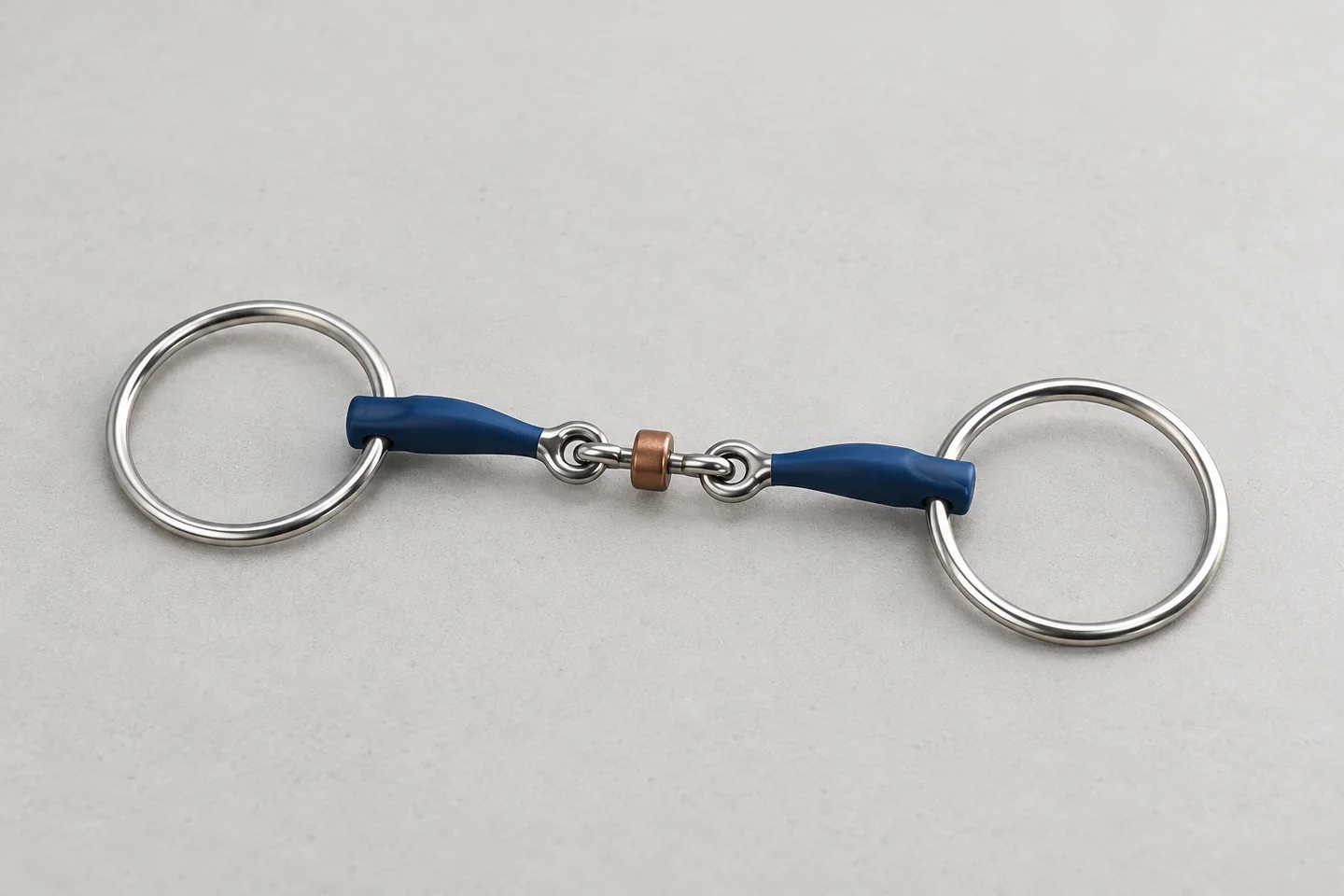
01 · Project scope
Separate the Features to Keep and Change
Tell us whether you are developing a new design or revising an existing bit. A reference sample is useful when a familiar construction needs to stay recognizable.
Keep
Identify the mouthpiece shape, cheek arrangement and connections that should remain unchanged.
Change
Mark the revised geometry or component, then add material, colour, logo and packaging requirements.
A drawing starts the discussion. Feasibility needs review of the complete design, not just its outline.
Review existing bit designs02 · Component brief
Define the Parts Before the Finished Bit
One material name rarely describes every part of a proposed design. List each component against its drawing reference so a change stays attached to the correct part.
- Mouthpiece
- Shape, joint arrangement and specified material.
- Rings or cheeks
- Form, connection and the dimensions for each version.
- Connecting parts
- Link or joint details and their relationship to adjoining parts.
- Rollers, where included
- Position, construction and material specified separately.
03 · Drawing details
Show Where Each Dimension Is Taken
Mark mouth width, mouthpiece thickness, joint dimensions and ring or cheek measurements on the drawing. State units and measurement points so both sides work from the same interpretation.
Dimension name
Identify the feature being measured.
Drawing reference
Locate its endpoints or relevant section.
Version
Keep the value with the correct size and revision.
Mouth width and thickness are different specifications. A model code or photograph is not a substitute for the stated dimension.
04 · Complete assembly
Make the Intended Movement Clear
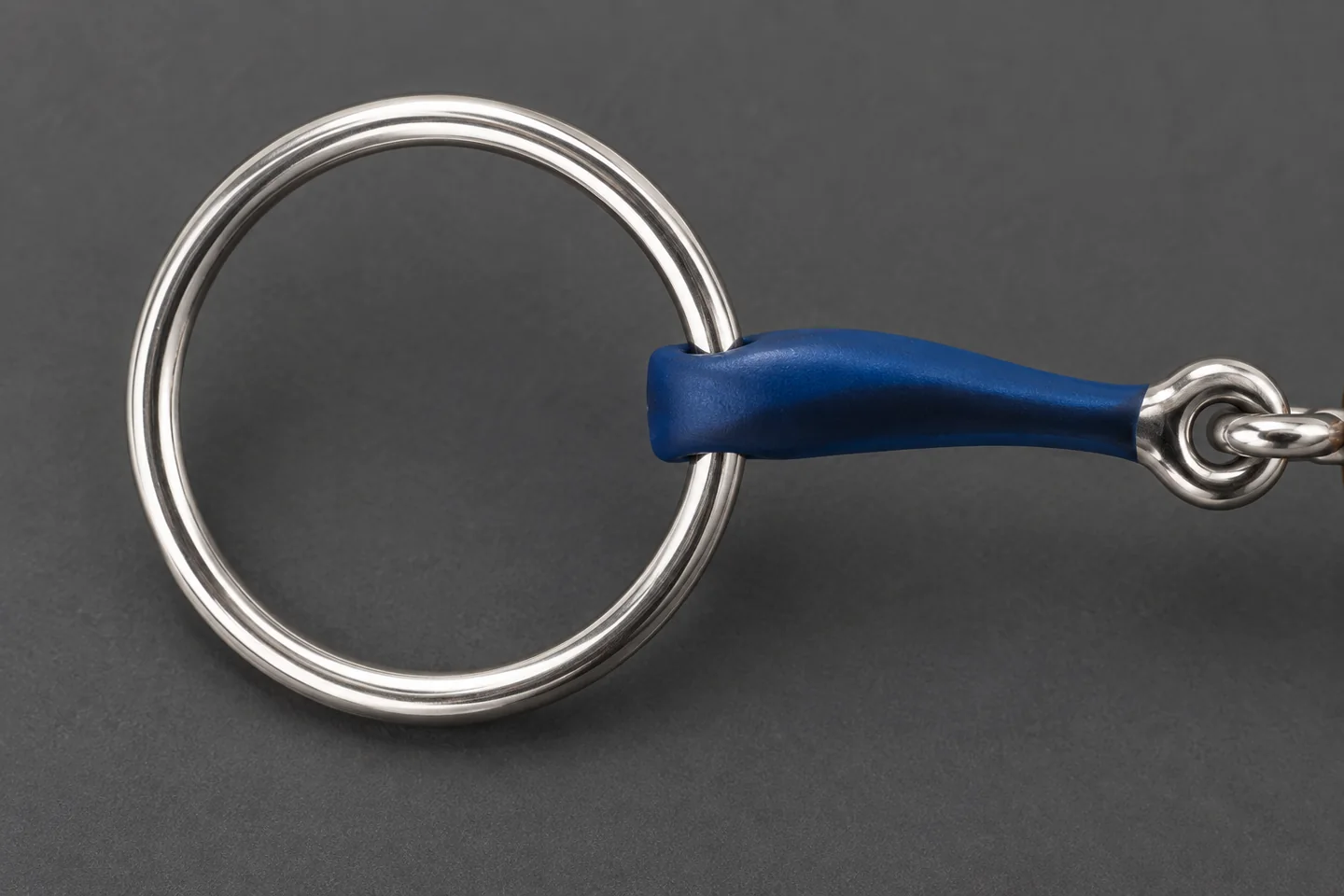
Where components articulate or rotate, show how they connect and what arrangement you intend. A sample can help explain details that a flat outline leaves unclear.
Review the assembled bit as well as its separate components. The connection shown here illustrates one shop model; your proposed design needs its own assembly review.
05 · Finish specification
Specify the Finish for Each Component
Set out the surface appearance you want and identify the areas requiring close sample review. Keep the finish description alongside the underlying material for that component.
Material beneath the finish
Use the agreed material specification, not a colour-based assumption.
Visible appearance
Provide a finish or colour reference and note the surfaces it applies to.
A blue, silver or copper-coloured surface does not establish an alloy, coating process or performance rating.
06 · Brand detail
Locate the Mark on the Actual Component
Send the artwork with its proposed size and position. Identify the part to be marked instead of leaving the placement to a general product photo.
ArtworkThe logo file and intended dimensions.
LocationThe named component and proposed marking area.
Sample reviewThe appearance on the finished surface and its relationship to working areas.
We can discuss the marking with the construction so it does not interfere with the intended working surfaces. Confirm the result on the sample before approving that version.
07 · Commercial scope
Keep Development Costs Separate from Unit Pricing
Tooling and development requirements depend on the component geometry and complete construction. Your drawings let us assess the work involved rather than assume every change uses the same route.
Development and tooling
Identify the work needed for the proposed shape and assembly, with its own quotation scope.
Production supply
Quote the selected version, quantities and packing separately from development work.
Tooling charges, sample arrangements, model minimums and timing are confirmed for the project. No fixed development fee or delivery period applies to every horse-bit design.
08 · Revision control
Approve One Clearly Identified Version
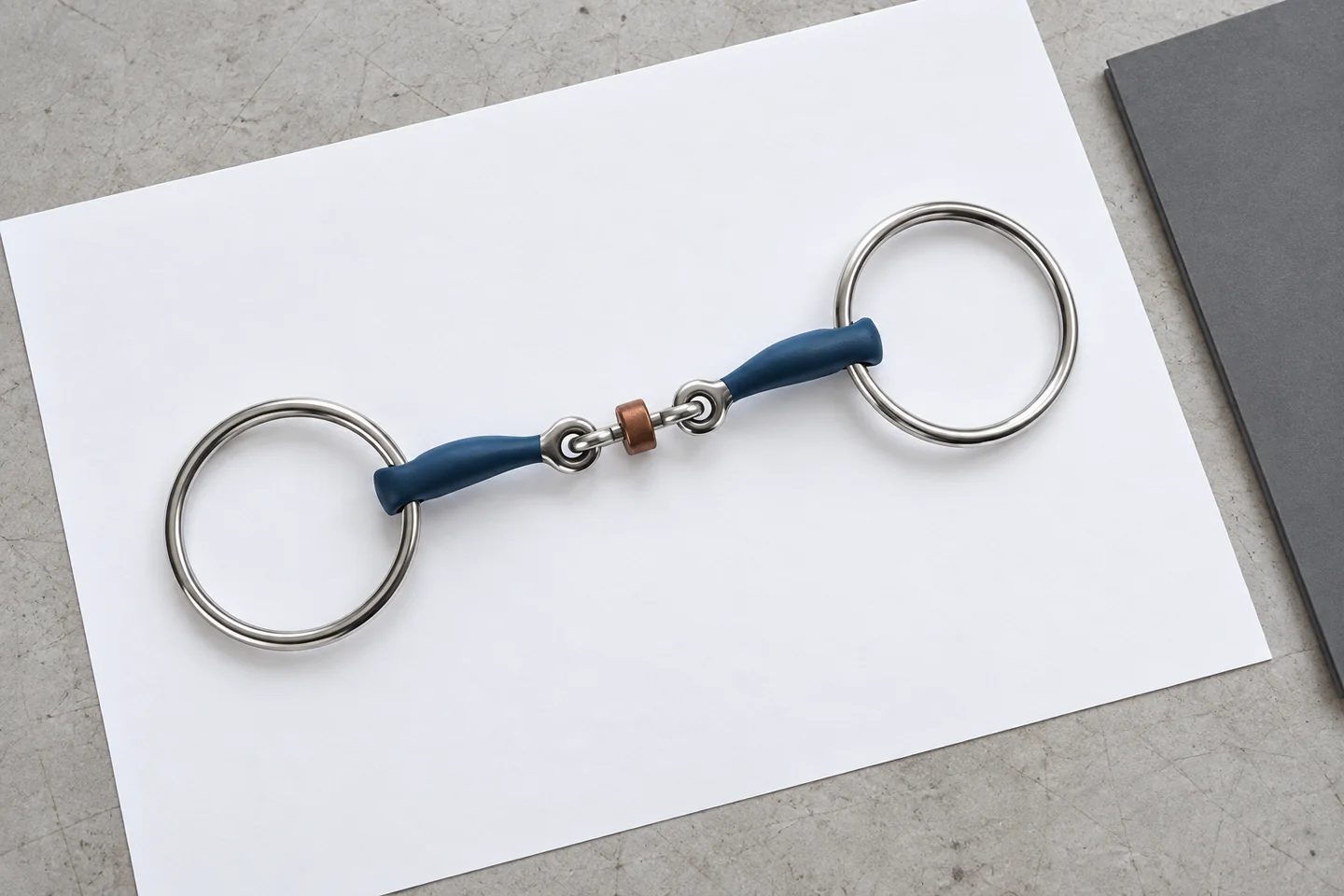
Reference the design
Keep the drawing revision and sample identity together.
Record the feedback
Attach each requested change to the affected component and dimension.
Confirm the ordered version
Name the revision accepted for production and retain any agreed conditions.
An earlier sample or an informal description is not approval of a later revision. Agree any required testing or market documentation for the actual model; design approval alone does not establish safety, clinical suitability or competition eligibility.
Horse Bit Development Questions
Keep changes tied to the component and version you want manufactured.
Can I change the mouthpiece while keeping the existing cheek design?
We can review a request that retains some components and changes others. Identify the mouthpiece changes and the cheek reference you want to keep. Connections and the complete assembly must be reviewed together before that combination is approved.
Do I need one material specification for the whole horse bit?
Not necessarily. A design can use different materials for its mouthpiece, cheeks, rings or rollers. Specify each relevant component separately and keep its finish with the same reference. This prevents the appearance of one part being used to describe the entire bit.
How should I identify the version when I reorder a custom bit?
Use the approved drawing revision or sample identity and the relevant size schedule. List any new changes separately, including material, marking or packing changes. An earlier sample should not silently become the reference for a later modified design.
A focused development enquiry
Send the Design and the Changes Together
Share the drawing and reference sample details, component materials, size range and quantity. Add the branding, packing, destination and any required testing or market documentation.
Product reference
Drawing revision and the sample you want to work from.
Change brief
Features to retain and the specific revisions requested.
Order scope
Quantities by version, packing and destination.
Review requirements
The sample checks and documentation needed for your decision.
Bring your design to us.
We will discuss the next development step from those references.
Relia Horseshoe · Qingdao Relia Industries Co., Ltd.
Shuyuan Road, Qingdao, Shandong, China