
Relia Horseshoe · Manufacturing in China
Private-Label Riding Stirrup Development
We manufacture riding stirrups for brands that need more than a different logo. Define shape, material, tread, finish and packaging as parts of one own-brand version.
Give each change a clear purpose
Decide What Makes the Product Yours
Appearance and identity
Color, finish, marking and packaging define the presentation of the selected model.
Product geometry
A revised opening, tread or frame changes the development scope. Mark those changes separately from the artwork.
If an existing model already meets your requirements, begin with its reference and list only the changes you need.
A defined starting point
Work from an Authorized Reference
Use your own design, a drawing you are entitled to develop or a reference for clearly defined changes. Share only artwork and branding you have permission to use.
The goal is an identifiable product brief, not an unclear request to copy another brand.
Compare Existing Stirrup Models →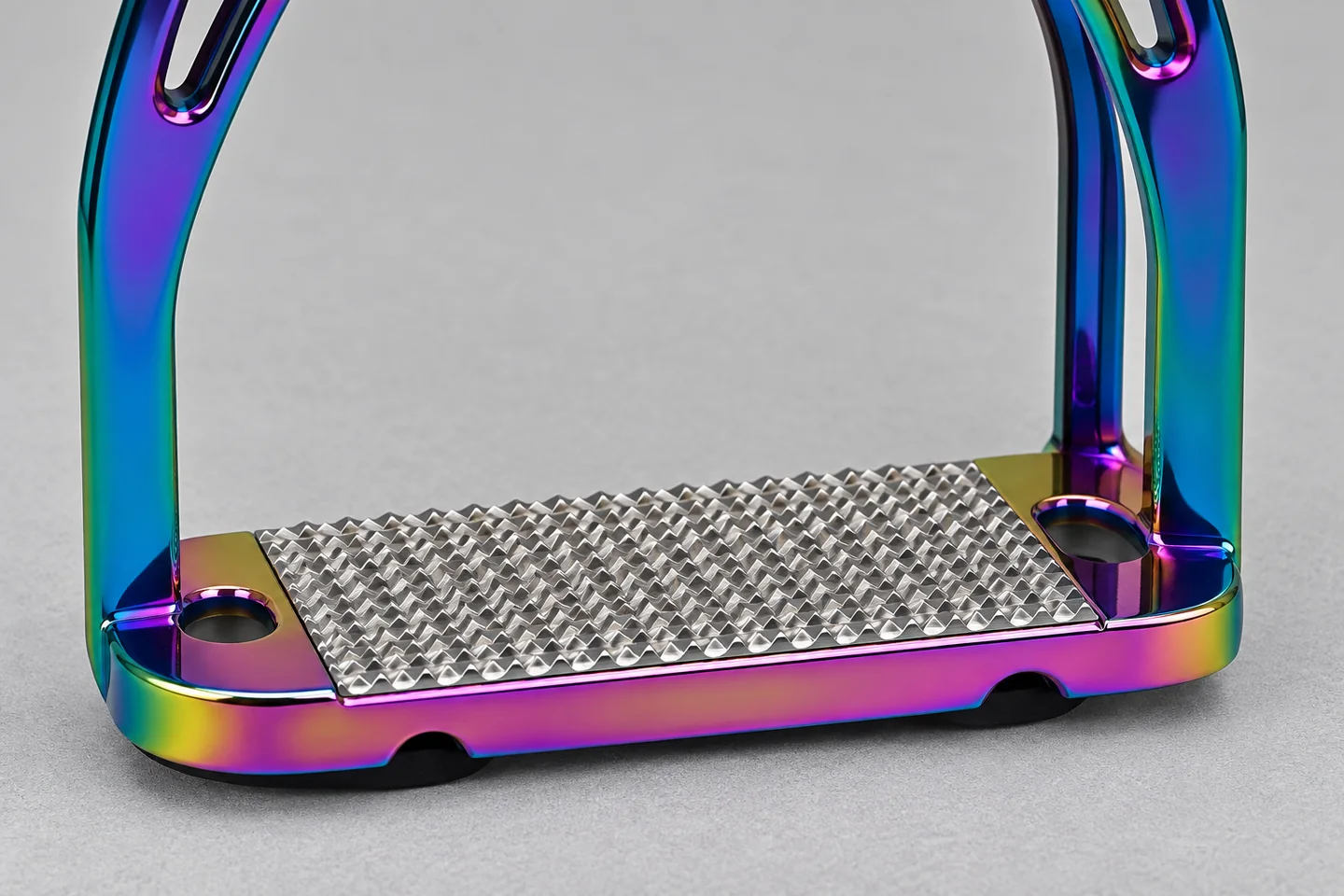
Define the parts the rider meets
Specify the Opening and Tread
Mark opening dimensions, tread width and surface arrangement in your brief. Include the edges and attachment details that the sample needs to address.
Keep the required materials and finish attached to that version. Appearance alone does not establish the alloy or product performance.
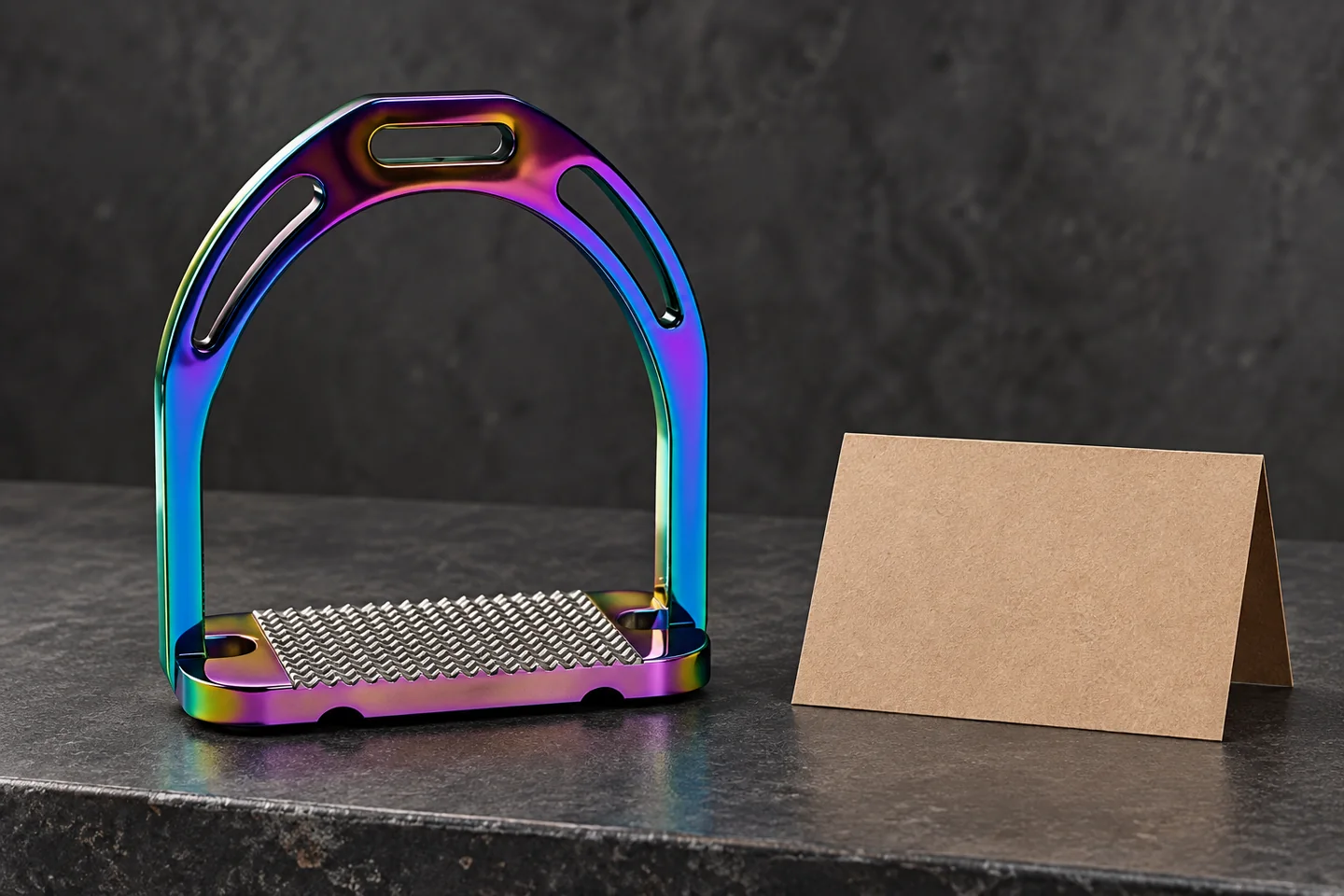
The product images on this page show a separate reference model, not the German project described below.
Project record · Germany · February–May 2025
A Brand-Specific Stirrup Version
A German equestrian brand worked with us to develop its own metal stirrup version rather than duplicate the original reference.
Surface and edges
Revised tread texture, adjusted edge radii and finish requirements.
Brand and pairing
Repositioned logo and closer attention to matched dimensions between paired items.
How that project progressed
Use Feedback to Refine the Sample
- First sample
Refine the Visible Details
The customer accepted the overall structure and tread feel, then requested clearer logo visibility and a stronger tread texture.
- Second sample
Review the Revised Version
After those changes, the customer reviewed the sample and approved production. This project used two rounds; new designs need their own sampling plan.
Turn requirements into an agreed review
Set Performance Requirements Explicitly
Define any required load, durability or release-function evaluation for the actual design. A product’s appearance or a general safety name does not replace an agreed test requirement.
Keep the Evidence Design-Specific
The German customer’s sample review is not a published load rating or release certification. Establish the applicable requirements and supporting evidence for your own product.
The product and the saleable pack
Approve the Pair and Packaging
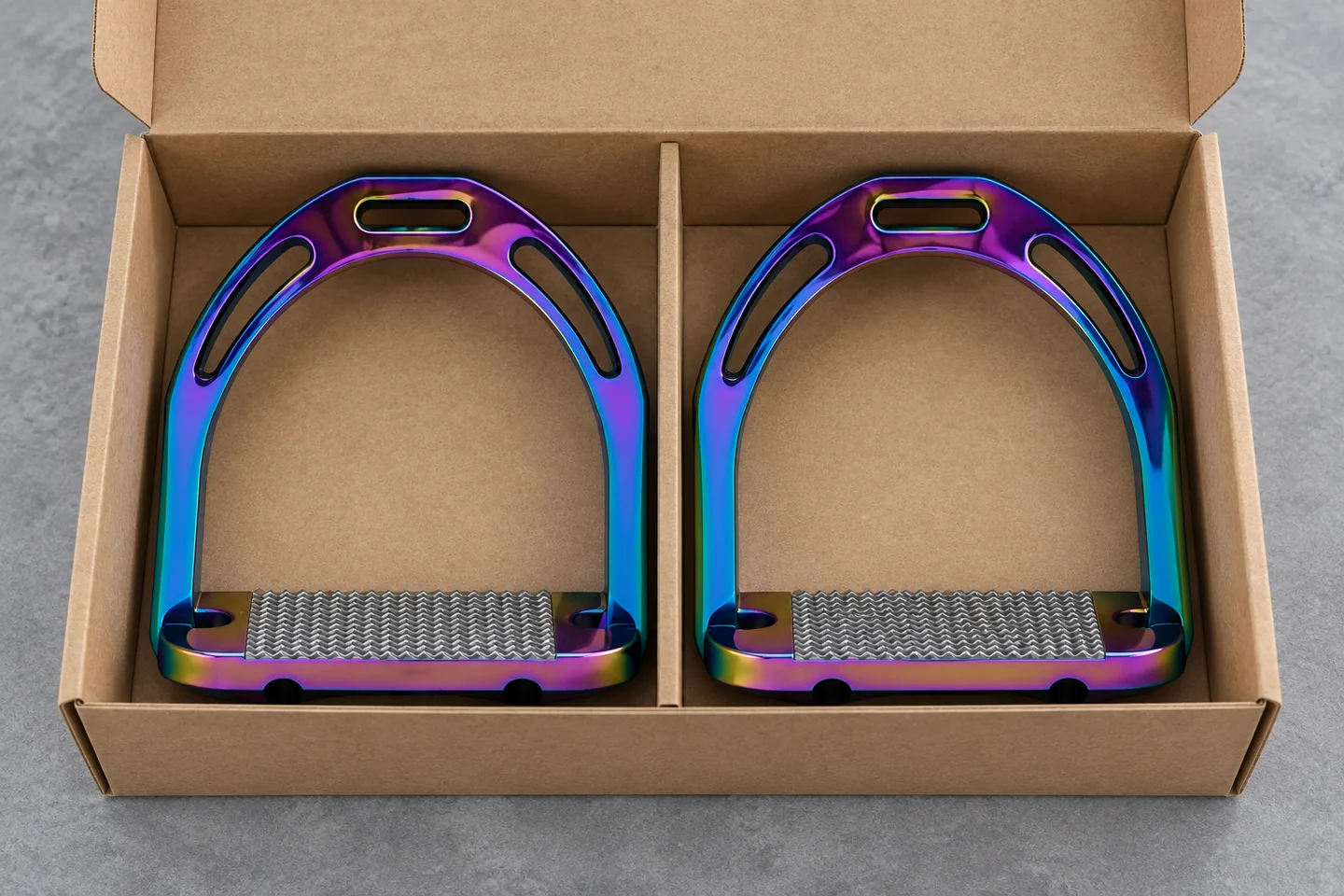
Agree paired appearance, dimensions and packing before the order is finalized. State the number of pairs per box and the presentation your brand requires.
The German project used one pair per box. Paired checks and packaging protection were part of that project’s review.
The image shows a separate packaging concept; agree the actual box and protection for your order.
The documented order outcome
Keep Project Results in Context
The delivered stirrup became part of the customer’s regular tack range. Repeat orders continued with the approved drawings and inspection requirements.
These are records from one completed project, not a universal minimum quantity, sample schedule or production lead time.
Planning Your Own-Brand Stirrups
Separate brand presentation from changes to the product itself.
Do I need a new stirrup design just to use my own logo?
Not necessarily. If an existing model suits your range, start with that reference and specify the logo, finish and packaging changes. A revised frame, opening or tread is a different development scope and needs its own review.
Is the German project’s 1,500-pair order your minimum for every private-label stirrup?
No. The 1,500 pairs describe one completed project, not a standard MOQ for all stirrups. Its approximately 38-day production period is also a project record, not a universal lead time. Your model and changes define the new quotation.
Does approval of an own-brand sample establish a safety or release rating?
No. Approval records the version accepted for that order; it does not itself establish a load, fatigue or release rating. Any such claim needs supporting evidence for the exact design. Specify the performance documentation your market requires as part of the development brief.
Build the version your brand needs
Bring Your Brand Brief
Send the authorized reference, dimensions, intended changes, material requirements and artwork. Add pair quantity, packing, destination and launch needs.
We can discuss development around the actual product. Sampling, tooling or development charges and timing depend on the design and agreed scope.