

Relia Horseshoe · Manufacturing in China
Farrier Aprons and Chaps for Professional Supply
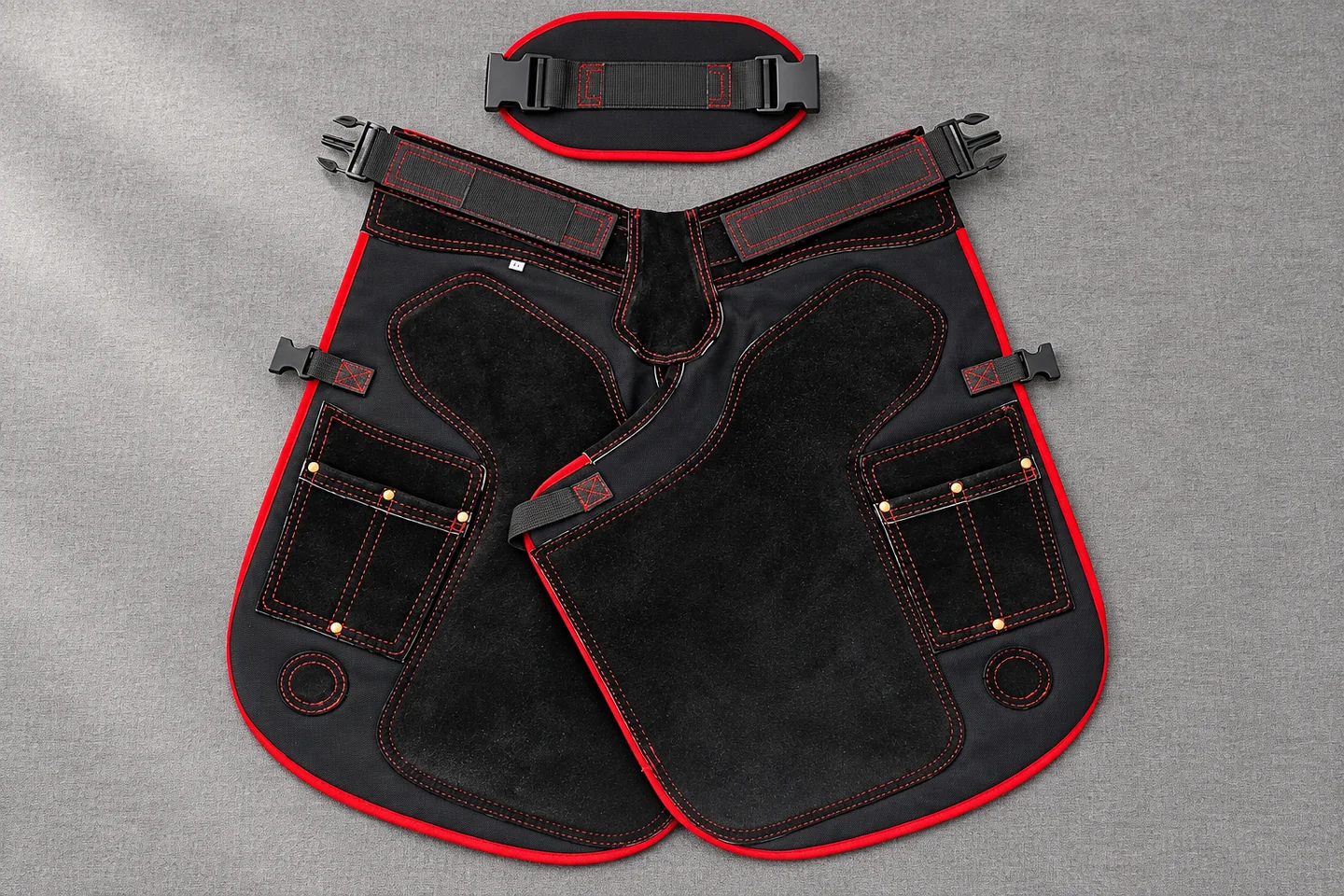
We manufacture farrier aprons and related workwear for wholesale and branded supply. Start with the way your customers work: coverage, movement and access to their tools.
Choose the working pattern
Shape the Coverage
Farrier work aprons and riding chaps are different product choices. For a farrier range, specify the working coverage and pocket arrangement rather than selecting by the word chaps alone.
Length and leg coverage
Define body length and the shape of each leg panel for your intended users.
Working position
A longer pattern is not automatically a better fit. Consider movement and the positions used during farrier work.
Name the construction accurately
Define the Material
Choose the actual material construction for the selected version. Genuine leather, coated materials and textile components should not be combined under one broad leather description.
Keep protection claims separate
Material appearance and thickness do not establish a certified protective rating. If your market requires cut, heat or other protection evidence, agree that requirement for the exact product before making the claim.
Make tools accessible
Arrange the Tool Pockets
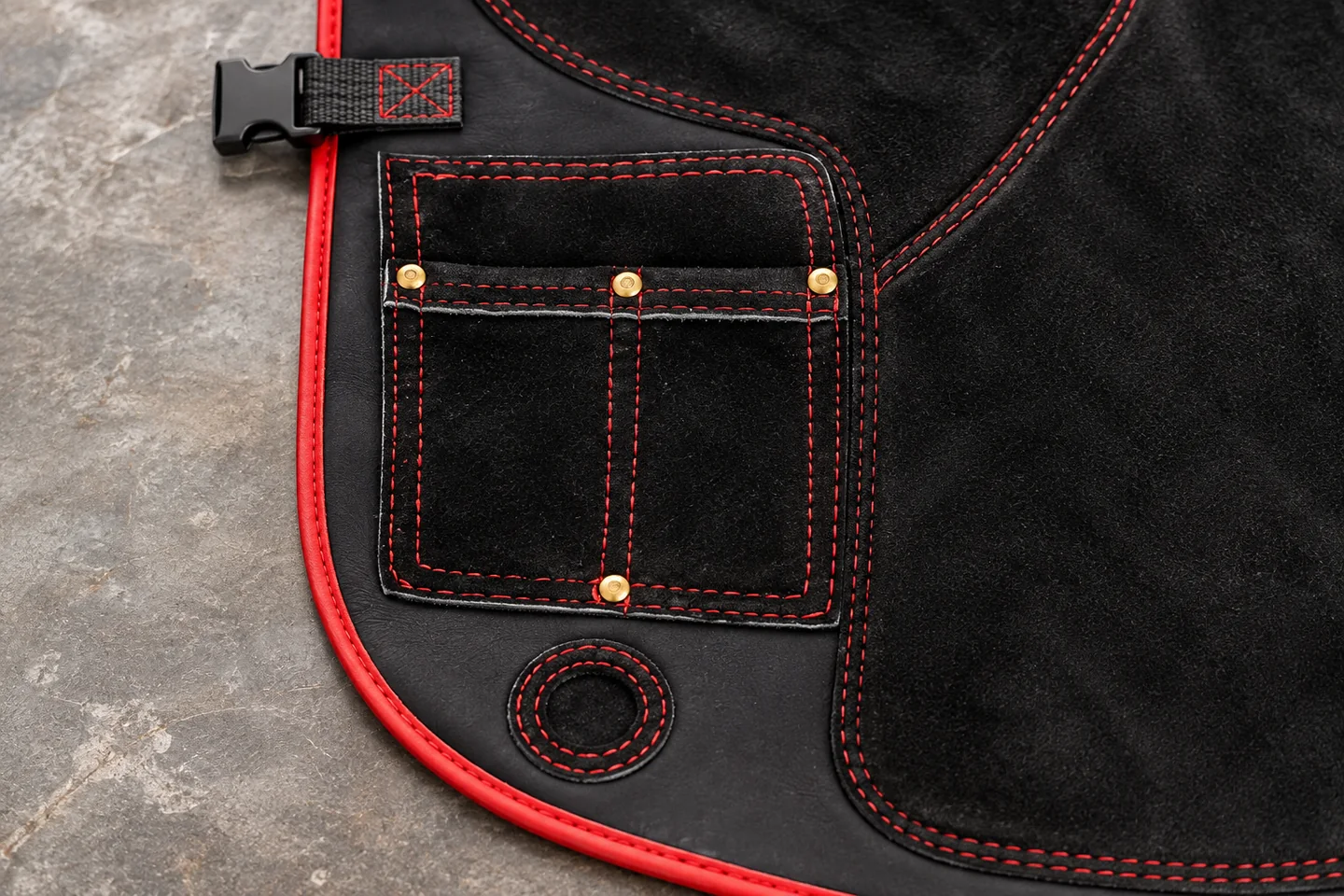
Pocket placement should follow the tools your customers carry. Send tool dimensions or a reference apron so we can discuss the layout as a working arrangement, not only a visual design.
- Tool length and width
- Preferred pocket position and opening
- Reach and access during work
Tools are not included unless they are separately listed in the order.
Fit the whole apron
Plan Adjustment and Fastening
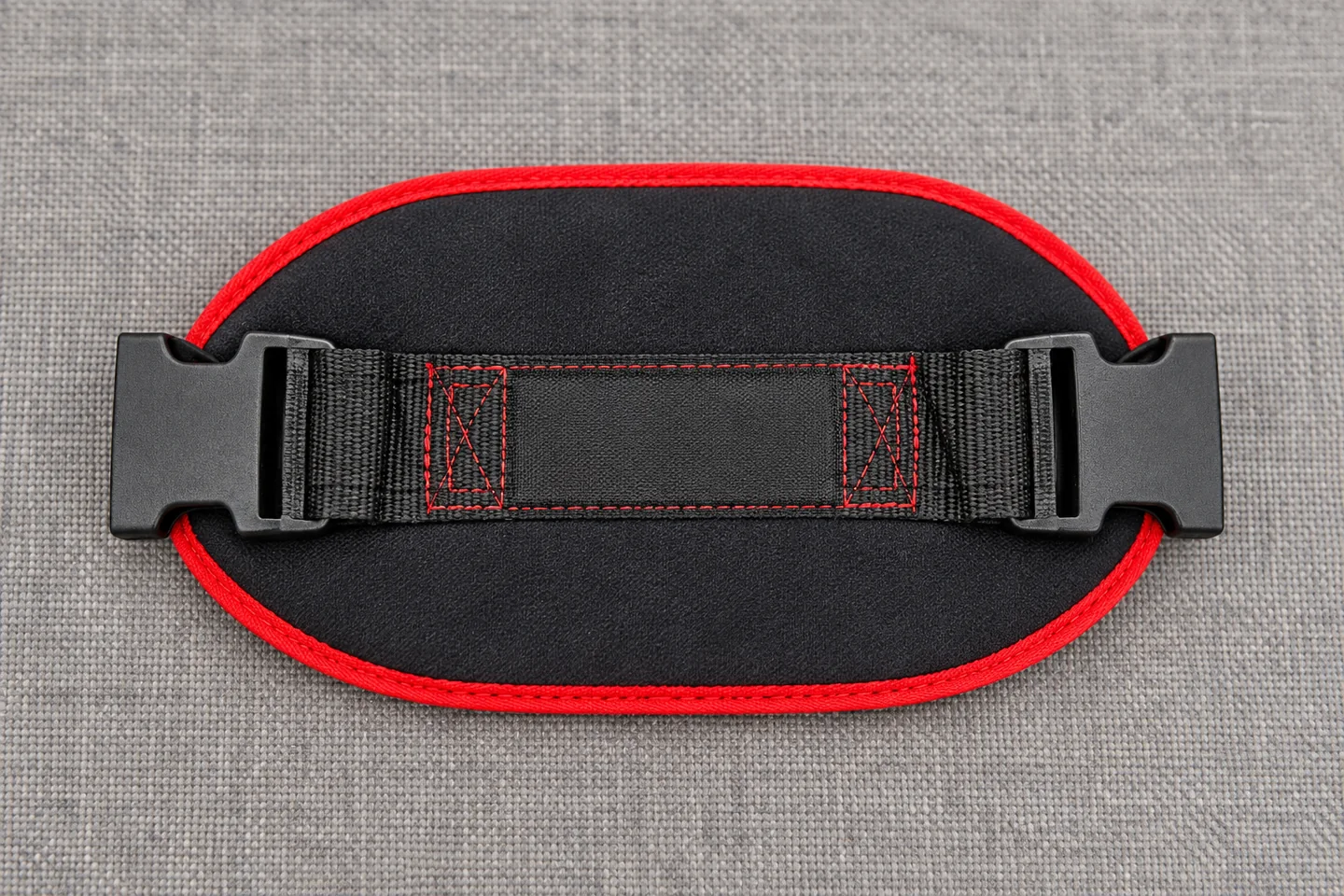
Waist adjustment, straps and fastening positions affect fit across the intended users. Review those details on the sample alongside the apron’s body dimensions.
Keep the selected buckle arrangement and adjustment range attached to the model reference. A similar waist size does not make different apron patterns identical.
Turn sample feedback into changes
Check Movement in Use
Include movements relevant to farrier work in your sample assessment. User feedback can reveal changes that a flat product photograph cannot show.
- Bulk
- Identify where the chosen layers or pocket contents affect movement.
- Reach
- Review access to the intended tools in the selected pocket positions.
- Adjustment
- Record the fastening positions and pattern changes needed for the intended users.
A visible brand, a usable layout
Integrate Branding Without Losing Function
Place the logo where it stays visible without interfering with pockets or fastening. Keep the artwork in the same brief as the product construction.
- ArtworkSupply the intended mark and colors.
- PositionShow placement on the selected apron pattern.
- SizeSpecify the finished marking dimensions and any packing requirements.
Bring your working requirements together
Share Your Apron Specification
Send the preferred pattern, material, size range, pocket requirements and quantity. Add adjustment details, branding, packing and destination.
An existing apron is useful when you want a revised version rather than an entirely new layout. We can discuss sampling, model-specific minimum quantities, timing and any development work around that brief.